
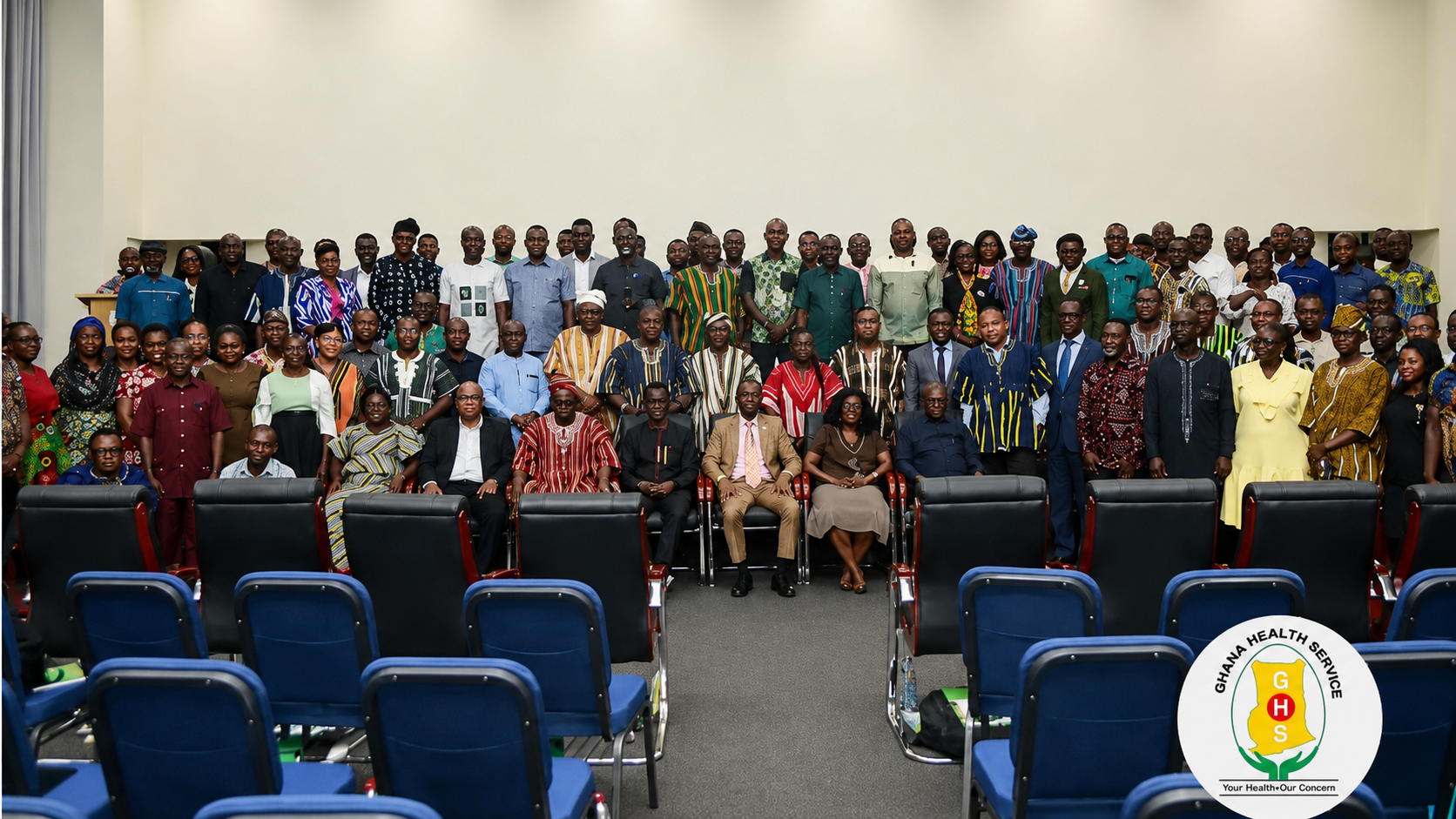
GHS Support Services Division Calls for Stronger Administration to Improve Healthcare Delivery
The Health Administration and Support Services (HASS) Division of the Ghana Health Service (GHS) has called for stronger cooperation, improved administrative systems and practical interventions to enhance healthcare delivery across Ghana.
The call was made during a conference organised by the HASS Division, which brought together health service administrators and other stakeholders to examine the role of administrative and support services in developing an efficient, responsive and people-centred health system.
Speaking at the conference, Director-General of the Ghana Health Service, Dr. Samuel Kaba Akoriyea, commended the HASS Division for organising the event and recognised the contribution of administrative and support services to the health sector.
Dr. Akoriyea said that while clinical care had traditionally received significant attention, effective healthcare delivery could not be achieved without strong administrative and support systems.
He indicated that the implementation of Free Primary Health Care was expected to increase demand for healthcare services, making efficient administration and dependable support structures increasingly important in responding to the needs of the population.
The Director-General urged administrators and support service personnel not to use limited financial and human resources as justification for reducing service quality.
According to him, effective administration was also a leadership responsibility that required commitment, accountability and continuous attention to the proper functioning of health services.
Dr. Akoriyea further called for mutual respect among the different categories of health workers and encouraged participants to use the conference to examine the challenges facing the health sector and consider practical ways of addressing them.
Concluding his address, he challenged health administrators to take responsibility within their respective areas and implement practical measures capable of improving service delivery.
HASS Director Calls for Constructive Dialogue
In his welcome address, Director of HASS, Dr. Ebo Hammond, said the participation of stakeholders in the conference reflected a shared commitment to strengthening Ghana's health system.
He encouraged participants to engage openly and constructively in discussions aimed at strengthening institutional governance and improving the delivery of healthcare services.
Chairperson for the session, Mr. Kofi Poku, also highlighted the importance of support services in healthcare operations.
He noted that although clinical care remained central to healthcare delivery, administrative and support services provided the structures that allowed health facilities and systems to operate effectively.
Mr. Poku said the Free Primary Health Care initiative was a major people-centred reform that would require strong support systems to respond to the anticipated increase in demand for healthcare.
He stressed the importance of cooperation between clinicians and support service personnel, adding that effective organisations should identify and address weaknesses before systems break down.
He therefore challenged conference participants to move beyond discussions and develop practical and implementable solutions that could be translated into action across the health sector.
Health Groups Reaffirm Support
Solidarity messages were also delivered by the Association of Health Services Administrators of Ghana (AHSAG) and the Medical Superintendents Group Ghana, represented by Dr. Sarpong Ntiamoah.
The groups reaffirmed their commitment to supporting efficient management within the health sector and indicated that they would continue contributing to stronger health administration and the effective functioning of the healthcare system.
The conference brought together health service administrators and stakeholders from across Ghana to consider the changing role of health administration and support services.
Participants also discussed practical approaches to strengthening the efficiency, resilience and people-centred nature of healthcare delivery in the country.