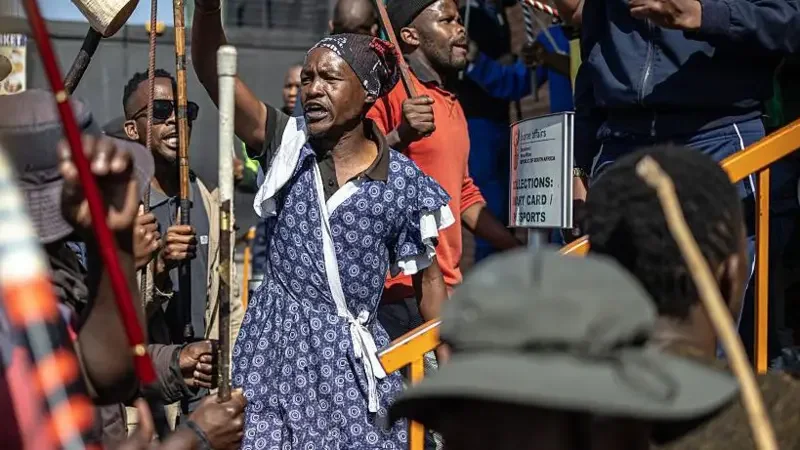
Ghana and Nigeria Demand Action as South Africa Faces Fresh Xenophobia Allegations
Playing ArticleNatural voice ready
Ghana and Nigeria Demand Action as South Africa Faces Fresh Xenophobia AllegationsGhana and Nigeria have intensified calls for stronger action against attacks targeting African migrants in South Africa, urging the African Union and other international bodies to pay closer attention to the situation.The two West African countries have accused South African authorities of failing to provide adequate protection for foreign nationals following reported killings, attacks, destruction of property and the displacement of migrants.South Africa has rejected claims that its government supports xenophobia and says investigations, arrests and prosecutions are already taking place.Ablakwa accuses South Africa of failing migrantsGhana’s Minister for Foreign Affairs, Samuel Okudzeto Ablakwa, accused the South African government of using the xenophobia issue to divert attention from problems within the country.Speaking to the BBC, Mr Ablakwa argued that South African authorities were not doing enough to prevent violence against foreigners.He alleged that video footage had shown police officers standing by while people were attacked, killed and had their property damaged.The minister also rejected an allegation by South African officials that Ghana was conducting a campaign intended to damage South Africa’s international image.According to Mr Ablakwa, South African authorities initially denied Ghana’s report that Bashiru Isak had been killed. He said a subsequent statement referred instead to a person named Kwabena Boagen.Mr Ablakwa questioned the identity of that individual, saying South African officials had still not provided Ghana with information showing who Kwabena Boagen was.Ghana is also investigating the reported killing of another national, Kojo Antwi, in South Africa, the foreign minister said.He described the recent developments as damaging to relations between Ghana and South Africa and called the situation embarrassing.During a diplomatic engagement with South Africa’s representative in Accra, President John Dramani Mahama also stressed that South Africa had a responsibility to protect the lives and property of African migrants.Ghana has so far repatriated more than 1,000 of its nationals from South Africa.Nigerian deaths raise further concernNigeria has similarly demanded action following the deaths of Nigerian nationals and allegations of police misconduct against foreigners.Tensions increased after a Nigerian man died during an arrest in Cape Town. South African authorities reportedly said the man collapsed while being taken into custody.South African officials are investigating the incident, while Nigeria has demanded a transparent inquiry into the circumstances surrounding the death.Earlier in July, South African authorities also confirmed that another Nigerian national had died in June under what were described as similar circumstances.During bilateral discussions in Abuja, Nigerian diplomats accused South Africa of failing to protect Nigerians and other African migrants from xenophobic violence.The meeting was ordered by Nigerian President Bola Tinubu after attacks, looting and violence against immigrants were reported in South Africa.Nigeria’s Minister of State for Foreign Affairs, Ambassador Sola Enikanolaiye, said Abuja had observed what he described as a persistent pattern of Afrophobic violence in South Africa since 2022.According to the minister, at least 98 Nigerian nationals had died in incidents involving mob violence, hate-related attacks and alleged extrajudicial killings.He further claimed that recent protests had forced nearly 1,500 people to leave South Africa after their homes and possessions were destroyed.Mr Enikanolaiye described the emotional scenes surrounding the arrival of the first group of evacuees, including children, women and elderly people who returned without their belongings.He said many of those killed or injured during the attacks were legally residing in South Africa.The minister also criticised what he described as the failure of local security agencies to intervene in several cases.He said Nigeria would not defend criminal conduct by any of its citizens abroad, but stressed that suspected offenders must be dealt with through the courts rather than through mob violence.South Africa says suspects are being prosecutedSouth Africa has denied supporting xenophobia, racism or other forms of intolerance.Chrispin Phiri, a spokesperson for South Africa’s Department of International Relations and Cooperation, told the BBC’s Newsday programme that the government was investigating cases and was prepared to prosecute people who engaged in vigilantism.Mr Phiri said 69 cases in the Western Cape alone had resulted in suspects appearing before courts.South Africa’s Minister of International Relations and Cooperation, Ronald Lamola, who also served as President Cyril Ramaphosa’s special envoy, said several people had been arrested in connection with attacks on foreign nationals.He stated that those responsible for violence would be prosecuted.Mr Lamola also said South Africa respected Nigeria’s sovereignty, territorial integrity and political independence, while maintaining that other countries must also respect South Africa’s borders and immigration regulations.Discussions between South Africa and Nigeria ended with commitments to consult more closely on migration and security matters and to reduce hostile public statements in order to protect the longstanding relationship between the two countries.Government condemns anti-migrant violenceSouth African authorities have said attacks against migrants are inconsistent with the country’s democratic values.Mr Lamola described violence against African migrants and other foreign nationals as a betrayal of South Africa’s constitutional commitment to human dignity, social justice and fundamental human rights.The government said it was coordinating efforts to ensure that people responsible for assault, intimidation, looting, robbery and other criminal acts faced prosecution.South Africa has also expressed support for a longstanding African Union proposal to organise a continent-wide conference on migration.According to the government, migration pressures cannot be resolved by selectively blaming particular communities.It said meaningful solutions would require honest discussions about the conditions that push people to leave their home countries, the factors attracting them to destination countries and the responsibilities of countries of origin, transit and destination.South African officials have maintained that the country remains committed to Pan-Africanism and solidarity across the continent.However, some South African residents have continued to blame foreigners for crime and unemployment.Reuters reported that at least four people had died in recent clashes and that several businesses had been looted.South Africa has remained a major destination for migrants from Nigeria and other African countries despite repeated incidents of xenophobic violence.The latest developments have increased diplomatic pressure on South African authorities to protect migrants, investigate reported deaths and ensure that people accused of crimes are handled through lawful processes rather than violence.
Ghana and Nigeria Demand Action as South Africa Faces Fresh Xenophobia Allegations
Ghana and Nigeria have intensified calls for stronger action against attacks targeting African migrants in South Africa, urging the African Union and other international bodies to pay closer attention to the situation.
The two West African countries have accused South African authorities of failing to provide adequate protection for foreign nationals following reported killings, attacks, destruction of property and the displacement of migrants.
South Africa has rejected claims that its government supports xenophobia and says investigations, arrests and prosecutions are already taking place.
Ablakwa accuses South Africa of failing migrants
Ghana’s Minister for Foreign Affairs, Samuel Okudzeto Ablakwa, accused the South African government of using the xenophobia issue to divert attention from problems within the country.
Speaking to the BBC, Mr Ablakwa argued that South African authorities were not doing enough to prevent violence against foreigners.
He alleged that video footage had shown police officers standing by while people were attacked, killed and had their property damaged.
The minister also rejected an allegation by South African officials that Ghana was conducting a campaign intended to damage South Africa’s international image.
According to Mr Ablakwa, South African authorities initially denied Ghana’s report that Bashiru Isak had been killed. He said a subsequent statement referred instead to a person named Kwabena Boagen.
Mr Ablakwa questioned the identity of that individual, saying South African officials had still not provided Ghana with information showing who Kwabena Boagen was.
Ghana is also investigating the reported killing of another national, Kojo Antwi, in South Africa, the foreign minister said.
He described the recent developments as damaging to relations between Ghana and South Africa and called the situation embarrassing.
During a diplomatic engagement with South Africa’s representative in Accra, President John Dramani Mahama also stressed that South Africa had a responsibility to protect the lives and property of African migrants.
Ghana has so far repatriated more than 1,000 of its nationals from South Africa.
Nigerian deaths raise further concern
Nigeria has similarly demanded action following the deaths of Nigerian nationals and allegations of police misconduct against foreigners.
Tensions increased after a Nigerian man died during an arrest in Cape Town. South African authorities reportedly said the man collapsed while being taken into custody.
South African officials are investigating the incident, while Nigeria has demanded a transparent inquiry into the circumstances surrounding the death.
Earlier in July, South African authorities also confirmed that another Nigerian national had died in June under what were described as similar circumstances.
During bilateral discussions in Abuja, Nigerian diplomats accused South Africa of failing to protect Nigerians and other African migrants from xenophobic violence.
The meeting was ordered by Nigerian President Bola Tinubu after attacks, looting and violence against immigrants were reported in South Africa.
Nigeria’s Minister of State for Foreign Affairs, Ambassador Sola Enikanolaiye, said Abuja had observed what he described as a persistent pattern of Afrophobic violence in South Africa since 2022.
According to the minister, at least 98 Nigerian nationals had died in incidents involving mob violence, hate-related attacks and alleged extrajudicial killings.
He further claimed that recent protests had forced nearly 1,500 people to leave South Africa after their homes and possessions were destroyed.
Mr Enikanolaiye described the emotional scenes surrounding the arrival of the first group of evacuees, including children, women and elderly people who returned without their belongings.
He said many of those killed or injured during the attacks were legally residing in South Africa.
The minister also criticised what he described as the failure of local security agencies to intervene in several cases.
He said Nigeria would not defend criminal conduct by any of its citizens abroad, but stressed that suspected offenders must be dealt with through the courts rather than through mob violence.
South Africa says suspects are being prosecuted
South Africa has denied supporting xenophobia, racism or other forms of intolerance.
Chrispin Phiri, a spokesperson for South Africa’s Department of International Relations and Cooperation, told the BBC’s Newsday programme that the government was investigating cases and was prepared to prosecute people who engaged in vigilantism.
Mr Phiri said 69 cases in the Western Cape alone had resulted in suspects appearing before courts.
South Africa’s Minister of International Relations and Cooperation, Ronald Lamola, who also served as President Cyril Ramaphosa’s special envoy, said several people had been arrested in connection with attacks on foreign nationals.
He stated that those responsible for violence would be prosecuted.
Mr Lamola also said South Africa respected Nigeria’s sovereignty, territorial integrity and political independence, while maintaining that other countries must also respect South Africa’s borders and immigration regulations.
Discussions between South Africa and Nigeria ended with commitments to consult more closely on migration and security matters and to reduce hostile public statements in order to protect the longstanding relationship between the two countries.
Government condemns anti-migrant violence
South African authorities have said attacks against migrants are inconsistent with the country’s democratic values.
Mr Lamola described violence against African migrants and other foreign nationals as a betrayal of South Africa’s constitutional commitment to human dignity, social justice and fundamental human rights.
The government said it was coordinating efforts to ensure that people responsible for assault, intimidation, looting, robbery and other criminal acts faced prosecution.
South Africa has also expressed support for a longstanding African Union proposal to organise a continent-wide conference on migration.
According to the government, migration pressures cannot be resolved by selectively blaming particular communities.
It said meaningful solutions would require honest discussions about the conditions that push people to leave their home countries, the factors attracting them to destination countries and the responsibilities of countries of origin, transit and destination.
South African officials have maintained that the country remains committed to Pan-Africanism and solidarity across the continent.
However, some South African residents have continued to blame foreigners for crime and unemployment.
Reuters reported that at least four people had died in recent clashes and that several businesses had been looted.
South Africa has remained a major destination for migrants from Nigeria and other African countries despite repeated incidents of xenophobic violence.
The latest developments have increased diplomatic pressure on South African authorities to protect migrants, investigate reported deaths and ensure that people accused of crimes are handled through lawful processes rather than violence.
Share:
Comments
No approved comments yet.
WHATSAPP CHANNEL
Meaningful stories picked for your day
Follow our WhatsApp channel for important headlines, radio updates and community stories.