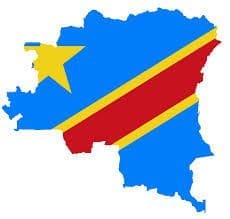
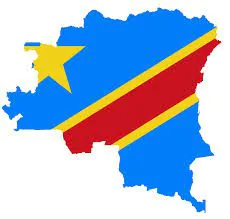
Congo’s resource endowment is valued at a staggering US$24 trillion. It holds the world’s largest deposits of coltan, is the world’s largest producer of cobalt ore, and sits on vast reserves of gold, copper, tin, tungsten, and industrial diamonds. Despite this exceptional mineral wealth, more than 70 percent of Congolese people live on less than US$2.15 a day.
This is not a paradox. It is a system. And it has architects.
The Minerals Leave. The People Stay.
Across the Democratic Republic of the Congo’s (DRC) informal and illegal mining networks, controlling extraction and trade is lucrative business. Armed groups profit from the smuggling of gold, coltan, tin and tungsten, usually through cross-border trade into neighbouring countries. This parallel war economy denies the Congolese government much-needed revenues to govern, build and maintain infrastructure.
The trail does not end at the border. United Nations (UN) experts report that more than 120 tonnes of coltan are transported monthly from the DRC into Rwanda, where it is laundered and exported as Rwandan product to China, Europe and the United States. Between 2017 and 2024, Rwanda’s mineral exports increased by nearly 500 percent, from US$373 million to US$1.75 billion, with gold the main export commodity at US$1.5 billion in 2024. Rwanda’s domestic mineral reserves do not come close to explaining those figures.
The M23 insurgency is allegedly financed through the exploitation of coltan and other minerals, including reports that M23 fraudulently exported at least 150 metric tons of coltan to Rwanda in 2024, representing between seven and ten percent of the DRC’s annual global supply.
In early 2025, the United States Treasury acted. Washington issued sanctions on James Kabarebe, Rwanda’s Minister of State for Regional Integration, for orchestrating Rwandan Defence Force (RDF) support to the M23, coordinating the export of extracted minerals from the DRC, and managing the revenue generated from illegally occupied mines.
Planes are indeed flying.
The Peacekeeping Question
When South Africa deployed approximately 2,900 troops to the DRC under the Southern African Development Community Mission in the DRC (SAMIDRC) in early 2024, the official framing was regional stability. The reality became considerably more complicated.
Public outrage in South Africa reached a fever pitch in January 2025 when M23 rebels and Rwandan forces overran the SAMIDRC base at Sake and captured Goma the following day, killing 14 South African National Defence Force (SANDF) soldiers.
In the aftermath, the questions grew louder. Rwandan President Paul Kagame’s spokesperson Yolande Makolo wrote publicly on social media accusing President Cyril Ramaphosa of sending troops to the DRC to protect his personal interests in mining. South Africa’s Economic Freedom Fighters (EFF) made similar allegations in a charged parliamentary session.
The Presidency firmly rejected those claims. Presidential spokesperson Vincent Magwenya said the assertion was completely devoid of any truth, adding that South Africa had been involved in more than 20 peacekeeping initiatives on the continent, a commitment stretching back more than two decades.
Both things can be simultaneously true: that South Africa has a genuine peacekeeping history, and that the conflict zone in eastern DRC overlaps precisely with territory containing some of the world’s most valuable minerals, in which various governments and corporations hold extractive interests. The two are not mutually exclusive. That is precisely what makes the question so difficult, and so necessary.
Kenya sent troops under similar framing. The Kenyan public was told it was a peacekeeping mission. Families sent their sons and daughters into a conflict whose official justification and actual dynamics have continued to diverge. When those soldiers land in territory where coltan is mined at $800,000 per month for armed groups, and where minerals exit the country on routes that no registry counts, the definition of peacekeeping deserves scrutiny.
The African Union Table
The African Union (AU) continues to convene summits. Leaders shake hands. Communiqués are issued. And in eastern DRC, over 7.3 million people are internally displaced, sexual violence remains rampant, and infrastructure lies in ruins.
Armed militias control mining sites and extort mine operators, using their profits to buy weapons, pay fighters, and fund massacres and forced displacement. In gold-rich Ituri Province alone, armed militias earned at least US$140 million in mineral revenues in 2024.
The men sitting at the AU table are not unaware of this. The trade routes are not secret. The UN has documented them for years. The US Treasury has sanctioned individuals involved in them. The question of why the plunder continues despite all of this documentation is, in the end, a question about power: who has it, who benefits from its exercise, and who bears the cost of its silence.
The $24 Trillion Question
Congo is called poor. The label is worth examining carefully. A country sitting on US$24 trillion in mineral wealth is not poor in the way that word is usually understood. Its people are poor. Its government is chronically underfunded. Its infrastructure is in collapse. But the minerals are being extracted. The wealth is being generated. It is simply going somewhere else.
Scholar Siddharth Kara has described a blood-for-cobalt economy in the DRC that continues to dehumanise Congolese people, drawing parallels with the slavery-for-rubber economy that defined the brutal colonial period in the Congo under Belgian King Leopold II.
The forms change. The structure endures.
Africa’s tragedy in the DRC is not a lack of resources. It is not a failure of geography or culture or capacity. It is a sustained, documented, and largely unpunished system of extraction that wears the language of stability, peacekeeping, and investment while leaving the people of one of the richest territories on earth among the poorest in the world.
The planes are flying. The question is what they are carrying, and for whom.