By Nana Karikari, Senior Global Affairs Correspondent
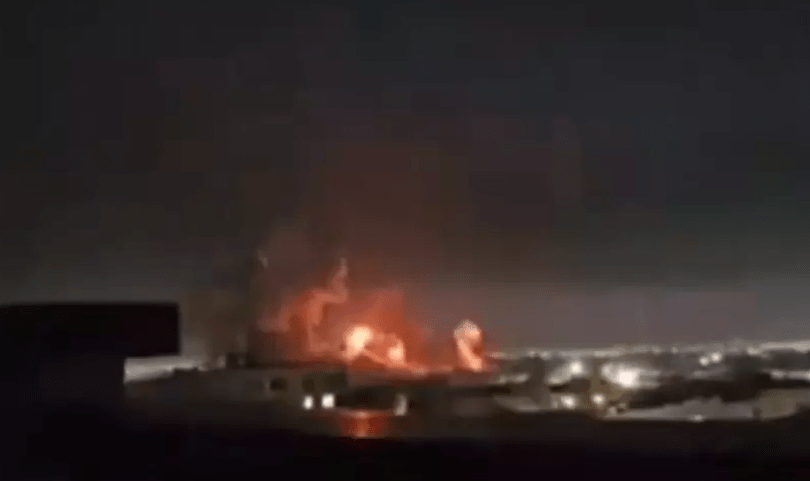
A volatile cycle of retaliatory strikes between the United States and Iran has plunged the Strait of Hormuz into renewed instability. American forces launched a sustained aerial campaign over the weekend, targeting Iranian air-defense systems, coastal radar installations, and drone capabilities. These operations, directed by President Donald Trump, were intended to degrade Tehran’s ability to interdict commercial traffic in the waterway. The U.S. Central Command confirmed successful strikes on dozens of targets, asserting that the strait remains an international waterway. In contrast, Iranian authorities claim the channel is closed to shipping until further notice, citing what they describe as unlawful foreign interference.
Tehran strikes back across the Gulf
Iran responded to the American offensive by firing upon U.S. military facilities across multiple nations. State media in Tehran reported that the Islamic Revolutionary Guard Corps targeted bases in Kuwait, Bahrain, Jordan, Oman, and Qatar. Reports from Bahrain indicated that sirens sounded repeatedly on Monday, while the Revolutionary Guard confirmed the destruction of radar systems in Oman and strikes against fuel and ammunition depots at Jordan’s Prince Hassan Air Base. This regional escalation has severely damaged the prospects of an interim peace agreement, which had been designed to facilitate the reopening of the strait after two months of high-stakes negotiations.
Divergent visions for maritime security
The conflict is underscored by a fundamental disagreement regarding the legal status of the Strait of Hormuz. While the international community recognizes the waterway as a critical energy choke point handling nearly 20% of global oil traffic, Tehran has moved to assert unilateral control. Iranian officials have demanded that transit vessels pay fees to the Islamic Republic, a move analysts argue attempts to bypass the established principle of transit passage. Iran’s Ministry of Foreign Affairs condemned the American strikes as a serious threat to regional security, accusing the U.S. of pressuring Oman to obstruct a new maritime security arrangement. “The era of one-sided deals is OVER,” declared Iranian parliament speaker Mohammad Bagher Ghalibaf. “We told you: keep your word or pay the price. Reality is knocking.”
Global markets react to energy uncertainty
The military surge triggered an immediate reaction in global energy markets. Brent crude futures for September delivery rose by 2.8% to reach $78.14 per barrel on Monday, while West Texas Intermediate saw a 2.5% increase. These fluctuations reflect deepening anxieties over potential supply disruptions at one of the world’s most sensitive maritime junctions. Iranian Foreign Minister Abbas Araghchi underscored the breakdown in diplomatic communication, noting on social media that “there can only be mutual compliance” while accusing Washington of violating prior agreements regarding oil sales.
New leadership pledges confrontation
The return to open conflict follows the death of Supreme Leader Ayatollah Ali Khamenei in February. His successor, Mojtaba Khamenei, issued a written message promising a severe response to his father’s death. “We pledge that we will take revenge for the pure blood of the martyred leader and all the martyrs of these two wars from the criminal and disgraced killers,” the statement read. “Revenge is the demand of our nation and must certainly be carried out.” Amidst this climate, President Trump has issued sharp warnings regarding the safety of American leadership, promising an overwhelming military response if Iranian threats materialize.
The region now hovers on the edge of a wider conflict. Backchannel diplomacy has broken down, and military postures are hardening. Both Washington and Tehran seem to prioritize strategic leverage over the stability of global energy flows. This leaves the future of the strait—and the path toward a durable regional peace—increasingly uncertain.