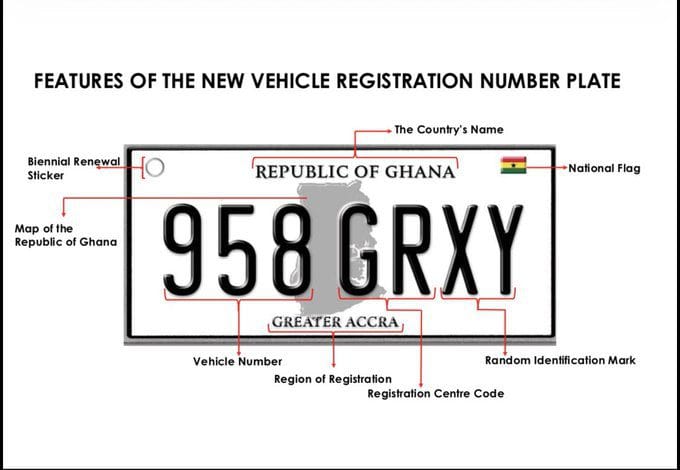
The Driver and Vehicle Licensing Authority (DVLA) is preparing to introduce a new vehicle number plate system powered by Radio Frequency Identification (RFID). I have seen some Ghanaians express concerns about the appearance of the new number plates, arguing that the numbering format looks clumsy or unfamiliar we should not lose sight of the bigger picture.
The real question is not whether the plates look different. The real question is: Will this system make our roads safer, reduce fraud, and modernize vehicle registration?
For years, Ghana’s vehicle registration system has faced significant challenges. It is estimated that about 5% of vehicles on our roads carry fake number plates, making it easier for criminals to evade detection while innocent vehicle owners often suffer the consequences.
The current system is also plagued by delayed access to vehicle information by law enforcement agencies, weak security features, vulnerability to fraud, duplicate number plates, and substantial revenue leakages. These are long-standing problems that demand lasting solutions.

ADVERTISEMENT
I have been told the proposed RFID-enabled vehicle identification system aims to address these shortcomings. By linking vehicle registration to the Ghana Card database, authorities will be able to verify vehicle owners’ identities more accurately and build a more credible, secure, and up-to-date national vehicle registry.
Imagine the possibilities.
- What if stolen vehicles could no longer be registered?
- What if every vehicle could be traced to its rightful owner within minutes?
- What if duplicate number plates became a thing of the past?
- What if law enforcement agencies could instantly verify vehicle information instead of relying on slow, manual processes?
- What if the DVLA, Ghana Police Service, National Insurance Commission (NIC), Judiciary, and electronic tolling systems all operated on a secure, integrated database?
These are exactly the kinds of reforms Ghana has needed for years.
Beyond improving security, I’m also told the new system is expected to prevent the registration of stolen and uncustomed vehicles, eliminate revenue leakages, strengthen ownership verification, create a more reliable vehicle registration database, and improve coordination among key state institutions.
It is difficult to discuss reforms like this without acknowledging the broader digital transformation agenda introduced by the previous government, which significantly reshaped public service delivery in Ghana. The Ghana Card, digital property addressing, mobile money interoperability, and other digital infrastructure laid the foundation for initiatives of this nature.
The former Vice President Dr. Bawumia consistently championed the integration of digital public services, arguing that Ghana’s future depended on interoperable systems rather than fragmented manual processes. Regardless of political affiliation, the digital infrastructure established under the previous NPP administration has made initiatives such as an RFID-based vehicle identification system far more achievable.
I believe the DVLA CEO, Julius Neequaye Kotey, deserves commendation for continuing this important initiative to strengthen Ghana’s vehicle registration database.
Every major reform comes with legitimate concerns. Some motorists may dislike the appearance of the new number plates, but aesthetics should not outweigh functionality if the system delivers greater security, accountability, and efficiency.
Ultimately, success will depend on implementation.
Given the current government’s track record, I, like many Ghanaians, hope this initiative is implemented competently. Even the best policy can fail if it is poorly executed. Vehicle owners should not be subjected to unnecessary delays, excessive costs, confusion, or avoidable inconvenience. This reform must solve existing problems not create new ones. If implemented effectively, it has the potential to deliver lasting benefits for all road users.
If implemented effectively, the RFID-based vehicle identification system could become one of the most significant reforms in Ghana’s transport sector in recent years. The technology is promising, and the objectives are commendable. The challenge now is to implement it wisely, efficiently, and transparently so that it delivers the benefits it promises to every Ghanaian vehicle owner.