By: Henrietta Afful
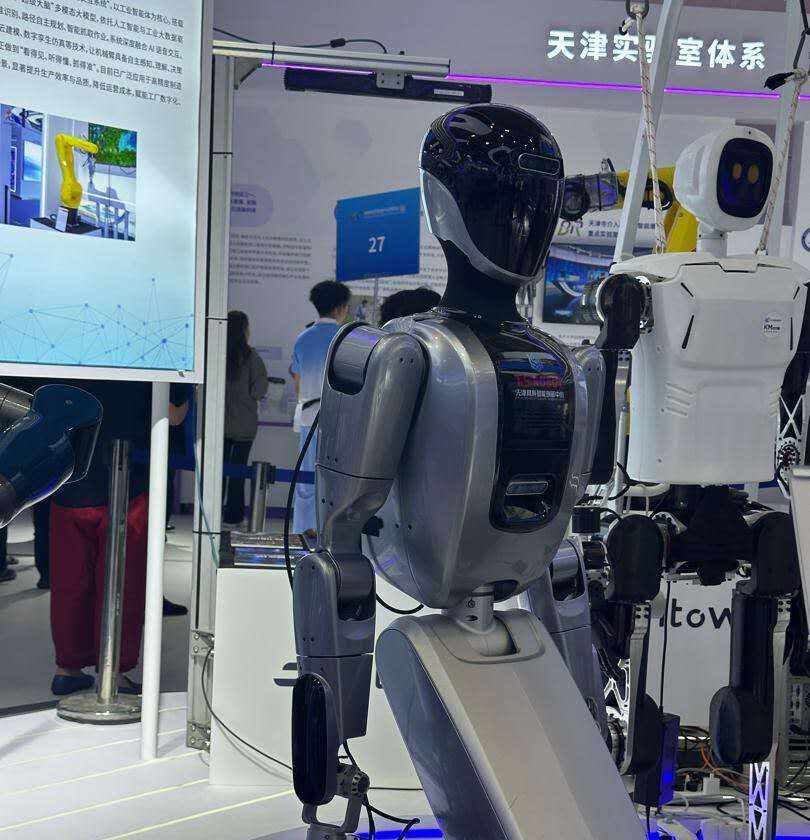
Tianjin, China – Boxing robots traded punches, humanoid robots performed for spectators and deep sea technologies offered a glimpse into the mysteries of the ocean floor. These were some of the innovations on display at the World Intelligence Expo 2026 in Tianjin, where more than 700 exhibitors, policymakers and technology ‘giants’ gathered to explore how artificial intelligence is reshaping industries and driving economic growth.
Held under the theme, “Intelligence: Extensive Development Space, Sustainable Growth Driver,” the four-day event was co-hosted by the municipal governments of Tianjin and southwest China’s Chongqing Municipality.
Speaking to stakeholders at the National Convention and Exhibition Center in Tianjin, the President of the China Association for Science and Technology, Wan Gang, said Artificial Intelligence (AI) is more than a display of futuristic gadgets but a powerful driver of economic growth, industrial modernization and societal progress.
“Innovation must serve people, create jobs and support sustainable development” Mr Wan Gang said.
He urged nations to work together so that the benefits of AI can be fully harnessed and shared globally and not only concentrated in some few countries, noting that no country can go alone.
He said developing countries especially, must have access to AI knowledge, resources and standards to ensure equitable growth. He said that a win-win cooperation is the main focus.
Mr Wan Gang also stressed on the importance of responsible development, highlighting that ethical standards and governance must guide the deployment of AI to ensure technology advances human well being without compromising societal values.
For his part, Vice Minister of Industry and Information Technology of China, Ke Jixin, said China would continue promoting the “AI+ Manufacturing” initiative to deepen the integration of artificial intelligence into traditional industries and strengthen innovation capabilities.
But beyond the futuristic displays and technological marvels, a more important conversation emerged; how countries can harness innovation to drive development and improve livelihoods.
For this, the United Nations Resident Coordinator in China, Dr. Stephen Jackson, said AI is transforming economies and societies at unprecedented speed.
He stressed that developing countries should have a voice in shaping AI’s future so that no one is left behind.
One of the key messages from the event was that data has become one of the world’s most valuable resources and therefore, it is important to build high-quality datasets to support industries such as manufacturing, transportation and logistics indicating that better data leads to better decision-making, greater efficiency and increased productivity.
Administrator of China’s National Data Administration, Liu Liehong stressed that high-quality data has become the foundation of industrial innovation and intelligent manufacturing.
He highlighted China’s push to build industry-specific datasets for sectors such as automobiles, shipbuilding, rail transport and petrochemicals.
The implications for Africa are significant
For Africa and other continents pursuing industrialisation and economic transformation, the World Intelligence Expo 2026 was a platform of how the future could look like when technology is integrated into national development strategies.
As African countries seek to diversify their economies, create jobs and increase competitiveness, technology could become a powerful catalyst for growth. From agriculture, healthcare, transportation and education, artificial intelligence presents opportunities to address long standing challenges while opening new avenues for innovation.
The Expo also highlighted the importance of digital infrastructure. Advanced technologies require reliable internet connectivity, robust data systems and a skilled workforce capable of operating in an increasingly digital economy. These are areas where many African countries are already making investments, but where greater collaboration and knowledge-sharing could accelerate progress.
Another notable message from the World Intelligence Expo 2026 came from discussions on global cooperation in artificial intelligence. Participants stressed that the benefits of AI should not be limited to a handful of developed economies. Instead, developing countries must be included and they must be willing to be involved in conversations about governance, regulation and application of emerging technologies.
That message resonates strongly with Africa, where a young and rapidly growing population presents immense potential for technological innovation. With the right policies, investments and partnerships, the continent could become an active contributor to the global digital economy rather than simply a consumer of imported technologies.
For Ghana, the opportunities presented by artificial intelligence are both practical and far-reaching. In agriculture, AI-powered technologies could support the government’s ‘Feed Ghana’ Programme by helping farmers monitor crop health, predict weather patterns, optimise irrigation and improve yields. In the cocoa sector, intelligent systems could be used to detect crop diseases early, assess soil conditions and enhance productivity across the value chain. Such innovations could help address longstanding challenges while improving food security and increasing farmers’ incomes.
Beyond agriculture, artificial intelligence has the potential to strengthen healthcare delivery in Ghana. AI-assisted diagnostic tools can help health professionals identify diseases more quickly, particularly in under-served communities where access to specialists remains limited.
Digital health systems powered by data analytics could also improve patient management, disease surveillance and resource allocation, ultimately enhancing the efficiency of the country’s healthcare system.
The same intelligent systems being showcased at the 2026 Expo are already helping China’s developments. Tianjin port, one of the World’s busiest port offers a practical example of how technology can drive development. The port has integrated autonomous vehicles, smart logistics systems and AI powered operations, improving efficiency and reducing cost.
In Ghana, AI-driven traffic management systems could help ease congestion in major urban centres such as Accra and Kumasi by optimising traffic flows and improving public transport planning. At the ports of Tema and Takoradi, intelligent logistics platforms, automated cargo handling systems and data-driven operations could enhance efficiency, reduce delays and strengthen Ghana’s position as a regional trade and logistics hub.
The robots may have captured the headlines in Tianjin, but the enduring message of the World Intelligence Expo 2026 was about opportunity in an era increasingly defined by artificial intelligence and data. Nations that invest in innovation, skills and digital infrastructure today, will be best positioned to thrive tomorrow. For Africa, the question is no longer whether the future is coming, it is how prepared will we be when it arrives.
About World Intelligence Expo

The World Intelligence Expo is one of China’s premier technology and artificial intelligence events.
This year’s edition of the event took place from May 28 to 31, 2026 at the National Convention and Exhibition Center in Tianjin.
The event attracted major Chinese and international companies including China Mobile, Lenovo, Unitree Robotics among others.