Thousands of commuters using the Accra-Kumasi Highway are enduring journeys of 10 to 12 hours on a corridor that should take six, and a road and building engineer says the government must act on the existing road immediately rather than wait for the proposed expressway to arrive.
Ing. Abdulai Mahama, who works in road and building engineering, says the congestion on Ghana’s busiest highway has crossed from inconvenience into a road safety emergency, with dangerous overtaking, lane indiscipline, and deteriorating sections compounding the daily ordeal for millions of road users.
“The government’s proposed express road is laudable. However, we have had a lot of complaints from the citizenry who ply the Accra-Kumasi route on a daily basis,” Ing. Mahama said, urging authorities not to abandon ongoing improvement works in favour of new infrastructure.
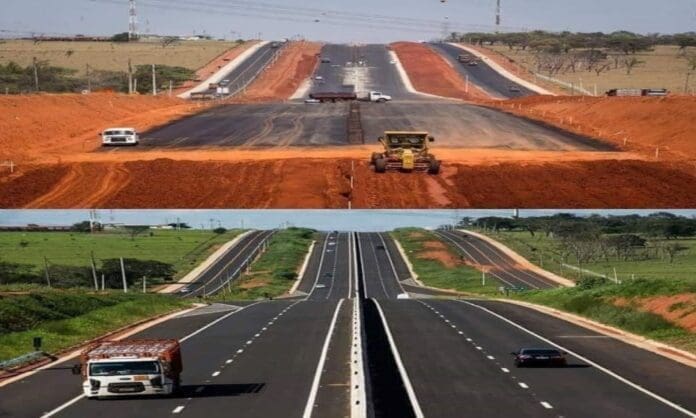
His most pressing concern is the status of partially completed bypasses, particularly around Nkawkaw. Designed to redirect traffic away from congested towns and reduce community accidents, those bypasses remain unfinished and are delivering little of their intended relief.
“It is really important that those ones which are supposed to be completed to improve road quality are not abandoned as we decide to do new infrastructure,” he said.
The highway became a flashpoint in January 2026 when motorists spent between 12 and 24 hours in gridlock on sections of the corridor during New Year celebrations, prompting President John Dramani Mahama to defend plans for a new expressway as an urgent national necessity. A fresh wave of severe congestion driven by stationary cargo trucks struck the Nkawkaw-Jejeti stretch on May 1, 2026, marking the third serious episode along the corridor in two weeks.
Ing. Mahama acknowledged that the proposed expressway would be transformative, offering faster travel between Ghana’s two major economic hubs. But he is emphatic that the current highway will not become redundant once the expressway is built. Communities along the corridor, including Nkawkaw and Konongo, will continue to depend on it, as will commuters who cannot afford toll-based travel on an express route.
“If you have an expressway and you need to go to Kumasi on time, then you have an option of using a newly constructed road if it comes into fruition. And then people going to Nkawkaw and Konongo will still use the old road. There are a lot of communities dotted along the central spine of the country,” he noted.
Beyond completing the bypasses, the engineer is calling for targeted rehabilitation of deteriorating road sections and firm enforcement against reckless driving. He cautioned that infrastructure alone cannot solve the problem if driver behaviour remains unchecked, pointing to countries such as Kenya where express routes and maintained alternative roads operate in tandem to give commuters real choices.
The government has identified the corridor as the centrepiece of its Big Push infrastructure agenda, with the Kumasi Outer Ring Road under construction since January 2026 and the Accra-Kumasi Expressway still in planning at an estimated cost of close to one billion dollars.
For Ing. Mahama, the timeline is the problem. Until those projects are delivered, the existing highway must not be left to deteriorate further.