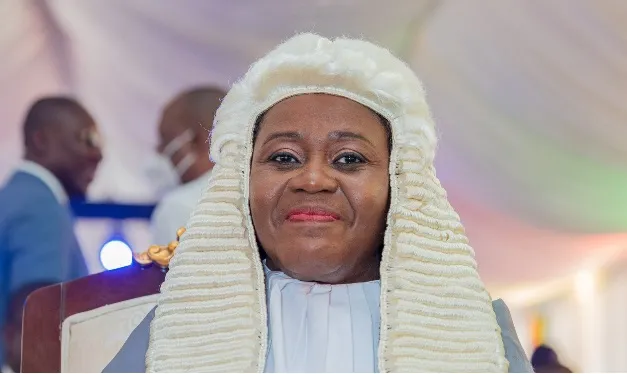
A former Acting Secretary to the President has called on President John Mahama to immediately release the full committee report that led to Chief Justice Gertrude Araba Sackey Torkornoo’s constitutional removal from office.
Kow Abaka Essuman, who previously served as Legal Counsel to the President, argues that constitutional transparency requirements now compel disclosure of all proceedings related to Ghana’s first-ever Chief Justice removal under Article 146 of the Constitution.
The demand comes after reports that the Minister for Government Communications indicated the committee’s report would not be made public. Essuman describes this position as “constitutionally indefensible” and contrary to Supreme Court precedent.
President Mahama removed Justice Torkornoo on Monday following recommendations from a committee established under Article 146(6) to investigate petitions against the Chief Justice. The constitutional provision requires presidential action once a removal committee makes such recommendations.
Essuman cites the 2015 Supreme Court ruling in Dery v. Tiger Eye P.I., which clarified that confidentiality requirements for judicial removal proceedings expire once committees complete their work and submit reports to the President.
“Once the Committee’s work is concluded and it has submitted its report, the constitutional injunction no longer applies,” the Supreme Court stated in that landmark decision. The court emphasized that public disclosure rights are merely “postponed for a time” during active proceedings.
The former presidential adviser points to precedents set during the Akufo-Addo administration, when similar committee reports were released publicly in the interest of transparency. These included determinations on petitions against various judicial officers and the Special Prosecutor.
Prominent legal figures reportedly testified before the committee in defense of the Chief Justice, including former Chief Justices Sophia Akuffo and Kwasi Anin Yeboah, along with legal luminaries Nana Dr. S.K.B. Asante, Sam Okudzeto, and Justin Amenuvor.
The caliber of witnesses and the unprecedented nature of a Chief Justice removal have intensified public interest in understanding the evidentiary basis for the committee’s conclusions. Legal observers note that transparency could help preserve public confidence in judicial independence.
Essuman argues that disclosure would “safeguard the reputation of both the Judiciary and the Presidency” while deterring frivolous petitions against high judicial officers in future cases.
The controversy reflects broader tensions around judicial independence and executive authority in Ghana’s democratic system. Constitutional law experts have followed the proceedings closely given their potential impact on separation of powers principles.
Several court cases challenging the constitutionality of the removal proceedings remain pending before the Supreme Court and High Court. Legal challenges have raised questions about procedural irregularities throughout the Article 146 process.
The former presidential counsel specifically demands release of the committee’s full report, witness testimonies, original petitions and the Chief Justice’s responses, plus records of presidential consultations with the Council of State.
Constitutional scholars note that Ghana’s democracy depends on transparent governance, particularly regarding decisions affecting the judiciary’s third branch of government. Public access to government information remains a cornerstone of democratic accountability.
The President has not yet responded to calls for disclosure, though constitutional law experts suggest the Supreme Court’s precedent in Dery strongly supports transparency arguments once proceedings conclude.