By Nana Karikari, Senior Global Affairs Correspondent
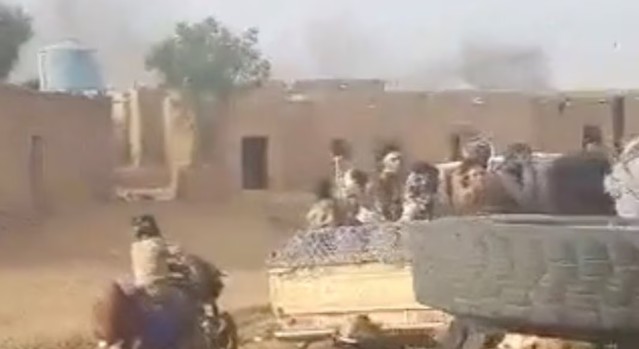
Mali faces a fresh wave of violence after insurgents launched simultaneous attacks across five locations on Saturday. These assaults struck military positions in the north, center, and south of the landlocked Sahel nation. The Malian armed forces reported clashes in Anefis, Aguelhoc, Gao, Sevare, and Kenioroba. The government maintains the situation remains under control. However, the geographic spread of the violence indicates a significant challenge to the ruling junta.
Government response and casualty reports
The Malian military issued an official statement claiming soldiers successfully repelled the insurgents. Officials stated the situation is “totally under control.” According to the army, 20 “terrorists” were killed in Sevare and six in Gao. Authorities confirmed the death of one pro-government fighter in Gao, with four additional personnel wounded. Despite these claims, the military did not immediately address the specific tactical successes reported by rebel factions in northern regions. A government spokesperson did not immediately respond to requests for comment.
Rebel factions and shifting territorial control
A Tuareg-led rebel group, the Azawad Liberation Front (FLA), claimed involvement in the coordinated strikes. Spokesperson Mohamed Elmaouloud Ramadane stated that his fighters entered the strategic northeastern town of Anefis. This region serves as a base for government troops and Russian forces deployed after April attacks. Rawani Ahmed Bouya, a member of the FLA, asserted that the group now holds Anefis and that combat operations were near completion. Independent verification of these territorial claims remains difficult. While the FLA partnered with the Al-Qaeda affiliate JNIM during a major operation in April, no formal claim of responsibility from the militant organization followed Saturday’s attacks.
Impact on civilians and strategic implications
Residents in conflict zones reported intense gunfire and heavy detonations throughout the day. In Gao, one local resident described the atmosphere of fear, noting that, “No one could go out this morning. … The Malian Armed Forces have blocked all the streets. We’re in our homes.” Another individual added, “The noise was so intense it felt like the roof was going to collapse.” Other residents, such as Ousmane Maiga, noted that they remain sheltered at home while soldiers conduct house-to-house searches for remaining insurgents. Ibrahim Yahaya Ibrahim of the International Crisis Group observed that the latest attacks, while “nothing comparable” to those in April, likely function as a tactical distraction. Wassim Nasr, a senior research fellow at the Soufan Center, noted that the targeting of Anefis was strategic because any Malian attempt to reverse the territorial gains from April would have been staged there.
Broader regional instability and the junta’s record
These events underscore the failure of Mali’s military leaders to deliver the security improvements promised following their rise to power in the 2020 and 2021 coups. The government continues to battle a complex insurgency involving Al-Qaeda and Islamic State-linked groups, alongside long-standing separatist movements. While the ruling junta has pivoted toward Russia and its Africa Corps for support, security across the Sahel has largely deteriorated. Neighboring Burkina Faso and Niger face similar struggles as regional military governments shift away from traditional Western security partnerships. The recent attacks highlight the precarious nature of the current regime, which faces pressure from both active insurgencies and a volatile domestic political environment.
The Sahel’s shifting diplomatic landscape
The recent surge in hostilities coincides with a broader regional trend of institutional isolationism. Mali, alongside Burkina Faso and Niger, recently notified the United Nations of its formal withdrawal from the Rome Statute of the International Criminal Court. This move, coupled with the formation of the Alliance of Sahel States, signals a rejection of traditional international oversight in favour of internal security cooperation. For citizens across the region, these diplomatic shifts raise critical questions about the future of accountability and the protection of fundamental human rights during ongoing counterinsurgency operations.
As the Sahel remains a focal point of geopolitical competition, the escalating instability in Mali presents a complex dilemma for international observers. The outcome of these persistent skirmishes will likely define the long-term viability of the current military administration and the future security architecture of the region.