By Nana Karikari, Senior Global Affairs Correspondent
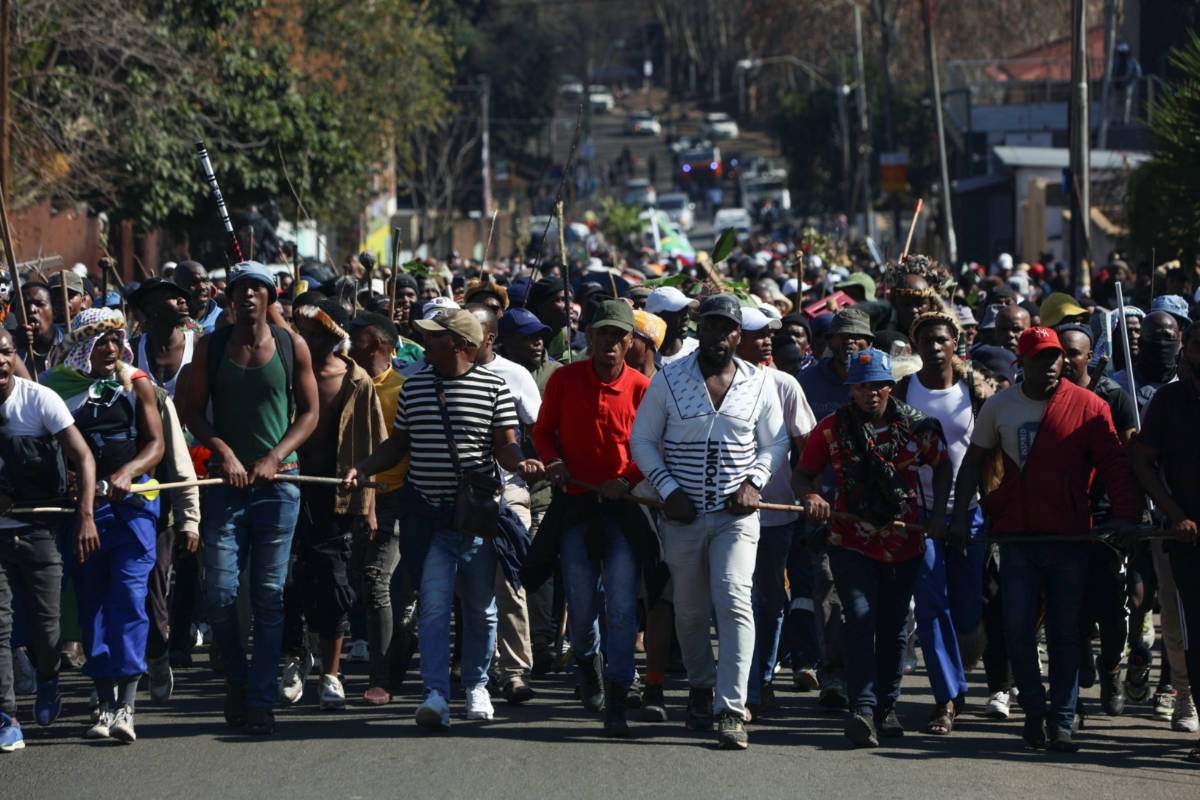
Thousands of foreign nationals are fleeing South Africa after anti-immigrant demonstrators marched across major cities on Tuesday to enforce a self-imposed deadline for undocumented migrants to leave the country. Participants draped in national flags and wielding traditional wooden weapons staged protests that resulted in scattered incidents of looting and violence. While many gatherings remained peaceful under heavy police surveillance, the atmosphere across commercial hubs was defined by widespread business closures and the anticipation of further unrest.
Escalating Violence and Security Response
The nationwide demonstrations intensified security concerns, prompting a significant deployment of officers. While authorities described most protests as peaceful, sporadic violence occurred in several areas. In the Johannesburg suburb of Thembisa, rioters threw stones at police and suspected migrants, while gunfire was heard near the central business district. Reports indicated that police deployed tactical vehicles and fired warning shots in Benoni. In the township of Soweto, protesters looted shacks belonging to foreign nationals, while authorities fired rubber bullets to disperse crowds in Pietermaritzburg.
Police Minister Firoz Cachalia confirmed the military was deployed on a contingency basis in parts of Johannesburg and Durban. Despite the heavy security presence, the recurrent nature of these attacks has left many foreign nationals vulnerable. Deputy National Commissioner for Policing Tebello Mosikili noted that 103 criminal cases have been opened against anti-foreigner vigilantes since March. Justice Minister Mmamoloko Kubayi stated, “Those who chose to exploit the marches to commit criminal acts will face the full might of the law. Police will continue to identify, arrest and prosecute all those responsible for criminal conduct.”
Personal Accounts of Displacement
The human cost of the unrest is increasingly visible at repatriation points across the region. A flight carrying 269 Nigerians arrived in Lagos on Tuesday, marking the third group to return this month as over 600 citizens have sought voluntary repatriation. For returnees like Emmanuela Kagusu, the decision was driven by an escalating climate of fear. “I’ve been in South Africa since 2017, and the threat there is too much,” Kagusu said upon arrival. “Like, every time killing, threats, you know, that we need to leave, ‘Hamba’ all the time. ‘Hamba’ means ‘leave.’ If you don’t leave, they’re going to kill us. So, we are not safe, so we have to just leave.” Another returnee, Sandy Orace, recounted a decade of recurring trauma: “Nine years ago, my first shop—the South African citizens—they came and broke my shop and took all my goods; they left me with nothing. Then I suffered for many years to start over again. Then when I succeeded about five years ago, they later came back and broke my house, stole all my properties; they were even trying to kill me.” Nigerian officials confirm that returnees are now undergoing medical screening and documentation as they receive assistance.
The Humanitarian Impact and Migrant Exodus
Beyond the Nigerian repatriations, thousands of foreign nationals continue to seek refuge at embassies or processing centers. Government figures indicate that over 4,000 individuals have been repatriated, with hundreds more evacuated by their home nations, including Malawi and Zimbabwe. In Durban, transit camps housing Malawians are being cleared. Some migrants remain stranded in transit, unable to secure funding for travel. A Malawian man who lived in South Africa for over two decades told local media, “We have no money for transport, food and shelter as we attempt to proceed to Malawi. We request both the governments of Malawi and Mozambique to come to our aid.” Hassan Phiri, awaiting processing, expressed a plea for unity: “All I want to say to South Africans is that we are all one. No matter what is happening, no matter what will happen, Africa must remain Africa. Africa can’t be Africa without South Africa… without Malawi, without anywhere. So whatever will happen, we must love each other and stick together as Africa.”
Roots of Discontent and Political Rhetoric
Protest organizers, including groups such as March and March and Operation Dudula, maintain that their movement is a response to national hardships. Jacinta Ngobese, a leader in Durban, stated, “For the next six months, we are asking for our national resources to be used to take the illegal immigrants out of this country. From building to building — they must go.” Supporters argue that migrants exacerbate unemployment and crime. Silindile Xaba, a 31-year-old protester, said, “People are not working, the jobs are being taken by illegal foreigners. It’s not fair.” Ngizwe Mchunu, another protest leader, claimed, “It’s a very sad story that we have been telling our government since the dawn of democracy that illegal immigration here is out of hand. It is time for our government to put South Africa first.”
Human rights organizations and experts dispute these claims, noting that scapegoating migrants distracts from systemic issues such as the legacy of apartheid and persistent inequality. Amnesty International South Africa warned that such rhetoric fuels xenophobia and risks further violence. President Cyril Ramaphosa has attempted to strike a balance between acknowledging public frustration and upholding the rule of law. In a recent newsletter, he reminded citizens, “Some foreign nationals who live in South Africa are here lawfully. They work, study, raise families, invest in our economy and contribute positively to our society. They too are entitled to the protection of our laws and our Constitution.”
Broader Implications for Regional Diplomacy
The surge in anti-migrant sentiment has strained South Africa’s diplomatic ties across the continent. Neighboring nations are increasingly concerned about the safety of their citizens and the economic impact of sudden mass repatriations. Analysts suggest that if these protests continue, South Africa risks isolation from its regional partners, potentially undermining the African Union’s vision for integrated trade and movement. The inability to manage this internal crisis effectively could diminish Pretoria’s influence in shaping future continental policies regarding migration and human rights.
Navigating the Path to Internal Stability
The government’s challenge now lies in addressing the deep-seated socioeconomic grievances of its citizens while ensuring the safety of its immigrant population. Experts emphasize that long-term stability will likely require comprehensive immigration reform and a renewed focus on economic growth to mitigate the competition for resources that currently fuels these tensions. As the country navigates this volatile period, the balance between national security and the protection of human rights remains a defining test for South Africa’s post-apartheid reputation.