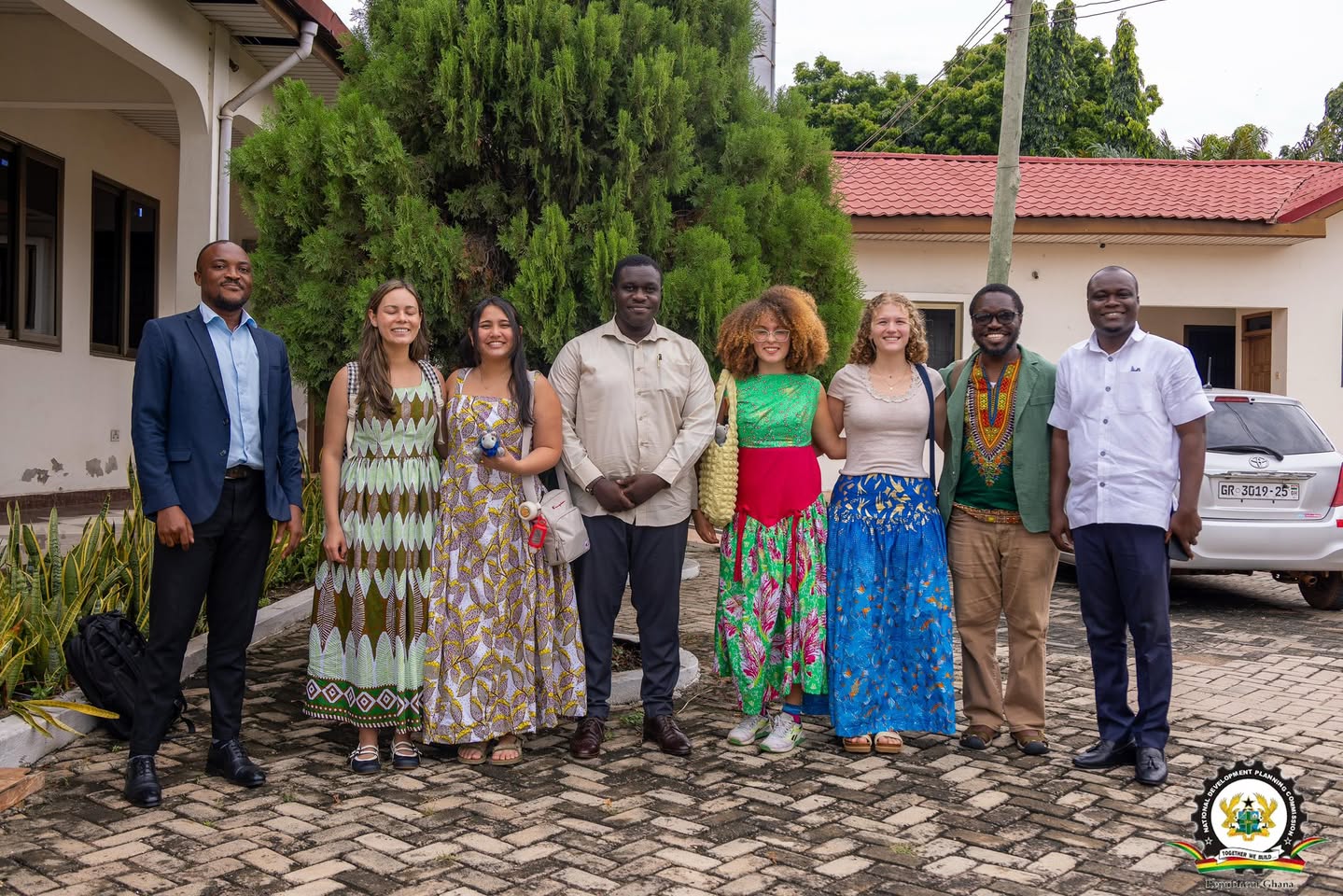
The National Development Planning Commission (NDPC) on Monday, 18 May 2026, hosted a delegation from the Department of Earth and Environment Sciences of the University of West Florida for a courtesy call and knowledge-sharing engagement focused on national development planning, governance, and sustainable development.
The delegation was received by Mr. Richard Tweneboah-Kodua, the Director of Research on behalf of the Director-General of NDPC.
He welcomed the team and highlighted the importance of knowledge exchange and collaboration between academic institutions and policy-making bodies.
Delivering a presentation on behalf of the Commission, Senior Planning Analyst, Mr. Christopher Conduah explained that the Commission derives its mandate from the legal framework establishing the institution and serves as the central coordinating body responsible for advising the President on development planning, coordinating national development policies, monitoring and evaluating programmes, and making proposals for the protection of Ghana’s natural and physical environment.
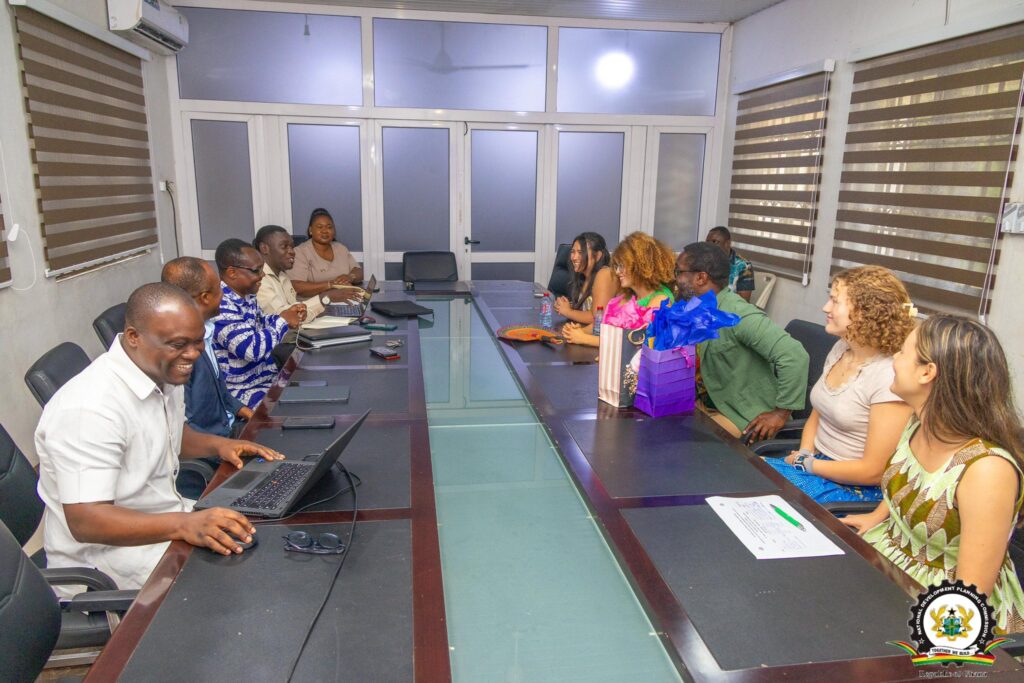
He further noted that planning in Ghana operates within an integrated and structured framework, requiring Ministries, Departments and Agencies (MDAs), Regional Coordinating Councils (RCCs), and Metropolitan, Municipal and District Assemblies (MMDAs), to align their development plans with approved national policy frameworks.
He emphasised the importance of spatial planning in national development, explaining that economic activities and service delivery are largely influenced by settlement patterns and the physical environment.
On monitoring and evaluation, he explained that sectors and districts report against nationally relevant indicators, which are used to assess development progress and guide corrective interventions where necessary whiles disclosing that the 2025 National Annual Progress Report to Parliament is expected to be submitted by 30 June 2026, and that a series of validation and review meetings are currently underway with various sectors to assess draft reports based on data submitted on relevant indicators.
Mr. Conduah disclosed that the Commission is currently coordinating the 2026–2029 planning cycle and reiterated that development plans are certified only after meeting prescribed planning requirements. He added that a significant number of national and regional plans have already been certified.
The visiting delegation from the University of West Florida expressed appreciation to the Commission for the warm reception and the opportunity to gain deeper insight into Ghana’s national development planning system. The team commended NDPC for its structured and evidence-based approach to policy coordination, monitoring, and implementation, describing the engagement as informative and impactful.
The delegation further noted that the discussions had broadened their understanding of the link between planning, governance, environmental management, and sustainable development.
DISCLAIMER: The Views, Comments, Opinions, Contributions and Statements made by Readers and Contributors on this platform do not necessarily represent the views or policy of Multimedia Group Limited.
DISCLAIMER: The Views, Comments, Opinions, Contributions and Statements made by Readers and Contributors on this platform do not necessarily represent the views or policy of Multimedia Group Limited.
Source link