By Nana Karikari, Senior Global Affairs Correspondent
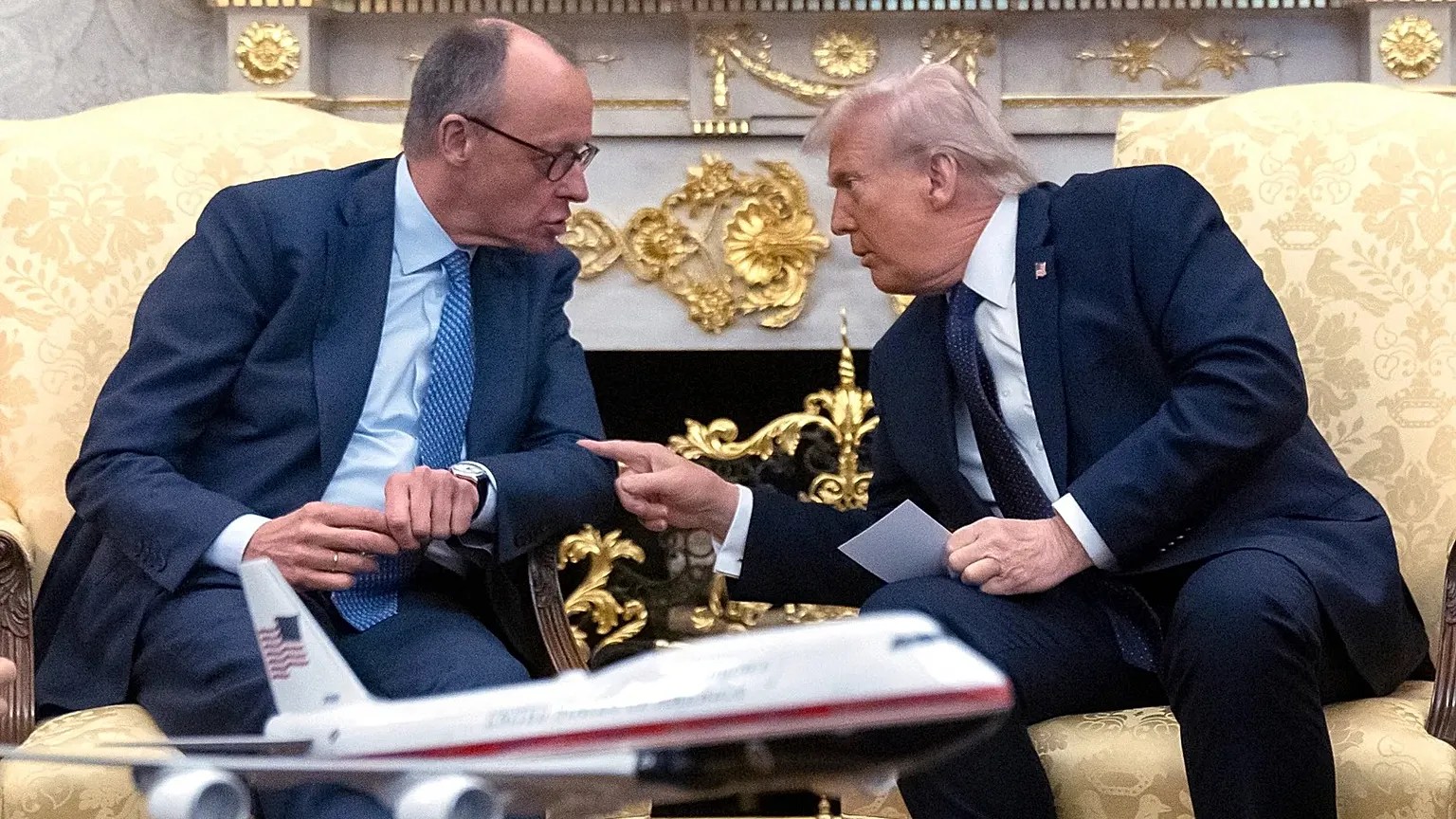
The United States announced Friday that it will withdraw approximately 5,000 troops from Germany. The decision follows an escalating public feud between President Donald Trump and German Chancellor Friedrich Merz over the ongoing U.S. and Israel-led war with Iran.
The withdrawal includes one brigade combat team and additional support forces. Chief Pentagon spokesperson Sean Parnell confirmed the reduction will be completed within six months to a year. According to Parnell, “This decision follows a thorough review of the Department’s force posture in Europe and is in recognition of theater requirements and conditions on the ground.”
Strategic Shift Amid Diplomatic Friction
The drawdown comes after President Trump expressed sharp frustration with European allies, who were not notified by the administration before the launch of the war. He has repeatedly criticized NATO members for their refusal to join operations aimed at reopening the Strait of Hormuz. A senior Pentagon official noted that the decision was a direct response to Merz’s recent commentary but also reflected broader frustrations regarding burden-sharing.
“The Europeans have not stepped up when America needed them,” the official said. “This cannot be a one-way street.”
The move marks a significant shift in the U.S. military footprint in Europe. While officials maintain that the reduction restores troop levels to 2022 standards, the timing suggests a political motivation. Trump has hinted that similar withdrawals could occur in Italy and Spain, citing a lack of cooperation in the Iranian conflict. “I mean, they haven’t been exactly on board,” Trump said of the allies. “Why shouldn’t I? Italy has not been of any help to us and Spain has been horrible, absolutely horrible,” Trump told reporters. “In all cases they said, ‘I don’t want to get involved.’”
Rhetorical Escalation Between Leaders
The diplomatic rift deepened this week following remarks by Chancellor Merz. During a visit to a school in central Germany on Monday, Merz suggested the U.S. lacked a clear objective in the Middle East and compared the current conflict to past interventions in Afghanistan and Iraq.
“The Americans obviously have no strategy,” Merz said. “This situation is, as I said, at least ill-considered and I do not see at the moment what strategic exit the Americans are choosing now.” He further claimed the U.S. was being “humiliated” by the Iranian leadership, stating, “The Iranians are obviously very skilled at negotiating, or rather, very skilful at not negotiating, letting the Americans travel to Islamabad and then leave again without any result.” He added that an “entire nation” was being “humiliated” by the leadership and the “so-called Revolutionary Guards.”
President Trump responded via social media, accusing the Chancellor of being soft on Tehran’s nuclear ambitions. “The Chancellor of Germany, Friedrich Merz, thinks it’s OK for Iran to have a Nuclear Weapon. He doesn’t know what he’s talking about!” Trump wrote. He added that if Iran obtained such a weapon, “the whole World would be held hostage,” and remarked that it was no surprise “that Germany is doing so poorly, both economically and in other respects!”
Impacts on Logistics and Regional Security
Despite the reduction, Germany remains the primary hub for American military operations in Europe. As of December 2025, data showed 36,436 active-duty personnel stationed there; this move will leave more than 30,000 in place. Pentagon officials clarified that the move does not currently affect critical facilities like Landstuhl Regional Medical Center or Ramstein Air Base, which serves as a NATO installation and a hub for aeromedical evacuation and airlift operations. The importance of these hubs was recently underscored when a U.S. airman, wounded when his aircraft was shot down over Iran, was treated at the Landstuhl facility.
Germany has provided limited support, allowing the use of its air bases for conflict-related operations while prohibiting their use as staging grounds for direct offensive strikes. The German embassy in Washington declined to comment on the latest developments. While Merz insisted Wednesday that his “personal relationship between the American president and me is, from my perspective, still good,” the policy shift suggests a cooling of bilateral military cooperation.
Domestic and Global Reactions
Germany’s Defense Minister Boris Pistorius played down the move, calling it “foreseeable” and stating it showed the need for Europe to take greater responsibility for
its own security. This aligns with Secretary of Defense Pete Hegseth’s recent messaging to allies like Romania, emphasizing that they must pay more attention to their own defense.
Conversely, critics argue the move undermines deterrence. Brad Bowman, a former national security adviser, stated that withdrawing troops would “primarily hurt the U.S. and benefit U.S. adversaries like Russia.” He noted that the presence “facilitates the projection of American military power into the Mediterranean.”
The decision marks the latest chapter in a long-standing debate. Trump previously threatened similar cuts in 2020 during the chancellorship of Angela Merkel. A similar 2020 effort was blocked by Congress and later reversed by President Joe Biden in 2021. To ease tensions, Berlin recently announced the deployment of a naval minesweeper to the Mediterranean to assist in reopening the Strait of Hormuz once hostilities end—a gesture that has yet to satisfy the White House. As Germany moves to increase its own defense spending to a projected 3.1% of GDP by 2028, the future of the trans-Atlantic alliance remains caught between shifting strategic priorities and the immediate pressures of the conflict in the Middle East.