
Ghana’s Water, Sanitation and Hygiene (WASH) sector remains the only major sector in the country without a dedicated independent regulatory body, and stakeholders are demanding that this gap be closed urgently before the economic costs deepen further.
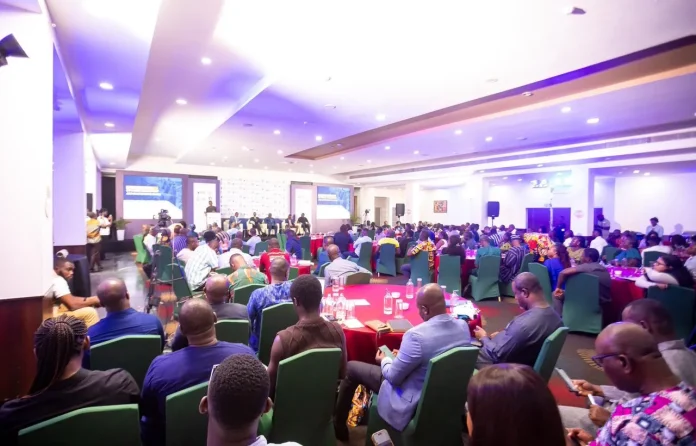
That was the central message at a high-level policy forum held at the Alisa Hotel in Accra, convened by the Institute of Statistical, Social and Economic Research (ISSER) of the University of Ghana in collaboration with Environment for Development and supported by Channel 1 TV.
Participants, drawn from parliamentary select committees, the private sector, development partners and policy researchers, backed the establishment of a standalone sanitation regulatory authority to coordinate policy, standardise operations and enforce compliance across the sector.
Head of Climate Action, Sustainability and Partnerships at the Ministry of Local Government, Rural Development and Chieftaincy, Ing. Godfred Boadi Esq., described the current situation as deeply unfortunate. He noted that while practitioners, investors and Metropolitan, Municipal and District Assemblies (MMDAs) continue to operate independently, the absence of a central supervisory body leaves the sector fragmented and accountability-free.
“Sanitation remains the only major sector operating without such oversight,” he said.
Stakeholders argued that fragmentation is actively costing the country. Research presented at the forum by Prof. Peter Quartey, Immediate Past Director of ISSER, showed that Ghana currently spends approximately GHS 180.2 million annually on waste management through MMDAs, while suffering losses exceeding GHS 6.2 billion from sanitation-related health and productivity impacts. That is a cost-to-loss ratio of roughly 30 to one.
The forum went beyond cataloguing losses to presenting a structural solution. Beyond establishing the authority, participants stressed that it must be designed to generate its own revenue streams, reducing dependence on the national budget and ensuring that the sector can sustain its own operations over time.
The call for a regulator adds institutional specificity to findings NewsGhana has previously reported from the same forum, which projected that adequate sanitation investment could yield annual economic benefits ranging from GHS 58.1 billion to GHS 67.2 billion between 2025 and 2032.
For stakeholders gathered in Accra, the message was unambiguous: increased funding into a fragmented, unregulated system will not deliver the results Ghana needs. The regulatory authority is not a bureaucratic addition but a structural correction the sector has long needed.