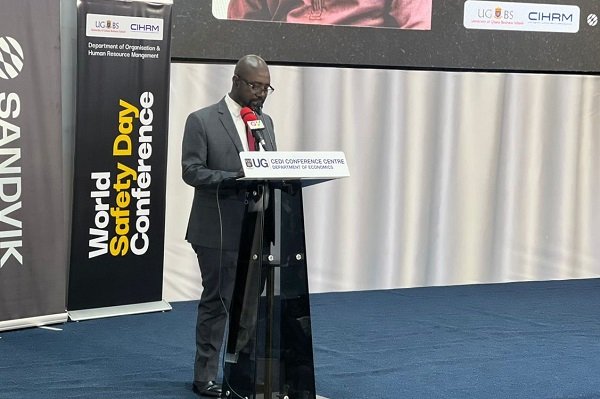
Economist Professor Godfred Bokpin has issued a stark warning that high lending rates continue to threaten Ghana’s private sector, despite recent macroeconomic improvements.
While the cedi has gained strength and inflation has eased, businesses still face borrowing costs that stifle growth and job creation.
Speaking at a recent banking seminar in Accra, Bokpin acknowledged the central bank’s decision to cut the policy rate to 25 percent. He cited stronger trade surpluses and better fiscal discipline as positive signs. Yet he argued that commercial lending rates, which can still reach 25 percent, are misaligned with the nation’s economic ambitions.
“The kind of interest rate we have can only fund imports and not production or manufacturing,” he said. The wide gap between the policy rate and what businesses actually pay reflects deep inefficiencies in the financial system, according to Bokpin.
He commended authorities for bringing inflation down from over 50 percent to around 12 percent today. But he stressed that stability alone is not enough. An economy must also be resilient, able to withstand external shocks without falling back into crisis.
The economist pointed to countries like Kenya, where businesses borrow at about 10 percent, as a competitive benchmark. High rates in Ghana deny firms the chance to expand and hire, ultimately slowing down broader economic transformation.
Bokpin also noted that sharp currency appreciation, while positive on the surface, can disrupt business planning. He called for more gradual adjustments and targeted government action to reduce the high cost of doing business.
The question now is whether policymakers can translate recent gains into affordable, long-term credit for the real economy. Until they do, the private sector may keep struggling to drive growth.