
Ghana is opening its 5G market to competitive bidding after its wholesale operator missed rollout targets, leaving the country projected to trail regional peers on coverage.
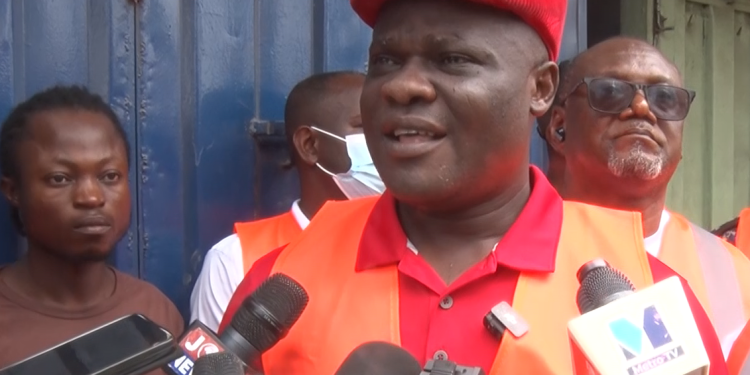
MTN Ghana Chief Executive Officer Stephen Blewett and Telecel Group Chief Executive Officer Moh Damush told Bloomberg their companies plan to bid in a 5G licence auction expected to open within weeks. The auction follows the government’s decision to end the exclusive concession held by Next Gen Infraco (NGIC), which had been due to run until 2034.
NGIC had only 49 operational sites as of March, far short of the government’s target of 1,200 sites by 2027, and had fallen behind on a large share of its 125 million dollar licence fee. The National Communications Authority (NCA) issued a notice in February stripping the company of its exclusivity to open the market to competition.
Damush said the government needs to guard against letting the auction favour whichever bidder pays most. “The auction is not conducted on the basis of the highest bidder,” he said, warning that outcome would deepen the advantage of already dominant players.
Communications Minister Sam George, who took office in 2025, had already signalled plans to open the licensing process because of the slow rollout. Both George and NCA Director-General Edmund Fianko declined to comment further when contacted by Bloomberg.
NGIC launched in 2024 as a shared wholesale network backed by Radisys Corp, a unit of Mukesh Ambani controlled Reliance Industries, alongside international investors Vinci and Brookfield through Ono Global, who put in roughly 850 million dollars. Ghana’s previous communications minister, Ursula Owusu Ekuful, had championed the partnership as a way to fast track nationwide coverage.
The stakes are regional as much as domestic. GSMA Intelligence forecasts that if Ghana launches commercial 5G soon, population coverage will reach only about 7 percent by year end, compared with 22 percent in Nigeria, 38 percent in Kenya and more than 60 percent in South Africa.
Ghana’s mobile market of roughly 35 million subscribers remains dominated by MTN, which holds about 80 percent of data subscribers, with Telecel, which bought Vodafone Group’s local operations, as the main rival. State owned AT Ghana can also bid. Officials have pointed to Ghana’s 2015 4G auction, when spectrum priced at about 67.5 million dollars per block left only MTN able to buy in, as a pricing mistake they want to avoid repeating.
The government is targeting 70 percent 5G population coverage by March 2027, when Ghana marks its 70th year of independence, with spectrum auctions for the 3.5 GHz and 26 GHz bands expected before the end of 2026.