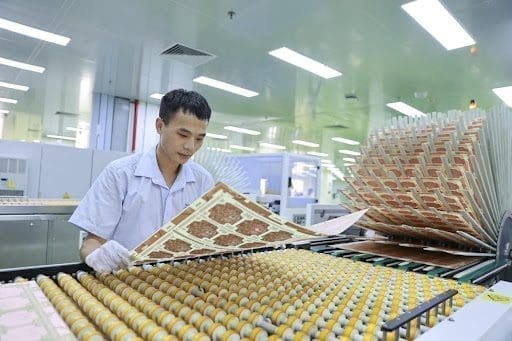
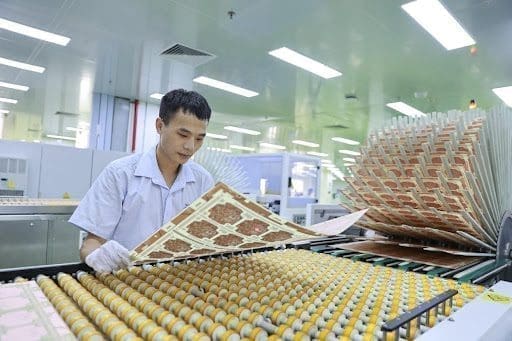
The conflict in the Middle East has driven printed circuit board prices up sharply, with costs rising as much as 40% in April alone, compounding pressure on electronics manufacturers already struggling with elevated memory chip costs, according to industry executives and analysts.
Iran’s strike on Saudi Arabia’s Jubail petrochemical complex in early April forced a halt in production of high-purity polyphenylene ether (PPE) resin, a critical base material used to manufacture printed circuit board (PCB) laminates. Saudi Arabia’s Basic Industries Corporation (SABIC), which accounts for approximately 70% of the world’s high-purity PPE supply, has been unable to resume output, severely tightening global availability of the material.
Shipping in and out of the Gulf has also been severely disrupted by the war.
PCB prices had been climbing since late last year, driven by a growing appetite for artificial intelligence (AI) servers. Demand accelerated sharply from March as manufacturers scrambled to secure raw material supplies. Goldman Sachs analysts confirmed in a recent note that prices surged as much as 40% in April compared to March.
Cloud service providers continue to absorb these higher costs, anticipating sustained demand growth for AI servers in the coming years.
The raw material crunch extends well beyond PPE resin. Glass fibre and copper foil are also in tight supply, with copper foil prices up by as much as 30% this year, with the rise accelerating in March. Copper accounts for around 60% of total raw material costs in PCB manufacturing, according to Victory Giant Technology, a major Chinese PCB supplier for Nvidia.
Supply shortages have also extended lead times for materials like epoxy resin from three weeks to as long as 15 weeks.
South Korea’s Daeduck Electronics has begun negotiating price increases with major clients, including Samsung Electronics and AMD. Multi-layer PCBs currently sell for about 1,394 yuan per square metre, while high-end models for AI servers reach about 13,475 yuan per square metre, a nearly tenfold difference that reflects the strong pull of AI applications on advanced PCB demand.
The global PCB market is projected to grow 12.5% to reach $95.8 billion in 2026, driven largely by expanding demand for advanced electronics and AI technologies.