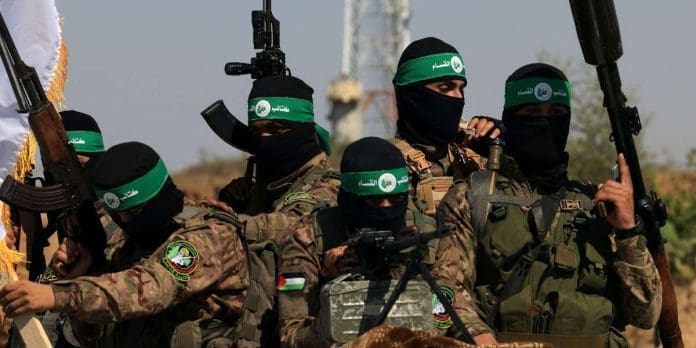
The United States and Hamas met face to face in Cairo on Tuesday night for the first time since the October 2025 Gaza ceasefire, as Washington pushed to rescue a fragile peace process stalled by a fundamental standoff over disarmament.
A US delegation led by senior advisor Aryeh Lightstone met Hamas chief negotiator Khalil al-Hayya, with Nickolay Mladenov, the high representative of the Gaza Peace Council, also present at the talks. The State Department declined to comment on the meeting.
The talks came days after Lightstone met with Israeli Prime Minister Benjamin Netanyahu to secure Israel’s commitment to fully implement its requirements under the first phase of the ceasefire agreement, with one source saying Israel agreed to do so if Hamas committed to disarmament.
Al-Hayya, who survived an Israeli assassination attempt in the Qatari capital Doha last September, pressed Lightstone on the need for Israel to fulfill its first-phase commitments, including a full end to strikes and greater humanitarian aid access, before any transition to the next stage of the agreement can proceed.
The core dispute centres on sequencing. Multiple sources said talks have repeatedly stalled over demands that Hamas agree to disarm before Israel has fulfilled its phase-one obligations. Hamas and multiple international organisations operating in Gaza have said Israel is not upholding its side of the deal, something Israel has denied while accusing Hamas of its own violations.
A senior Hamas source described the disarmament proposal as unbalanced, saying it reduces the entire process to a single clause while postponing Palestinian humanitarian, political, and administrative rights in favour of Israeli security priorities.
Hamas sources also alleged that Mladenov has conveyed warnings that a refusal to accept the current disarmament paper could result in a return to full-scale war. Mladenov’s office has not publicly responded to those allegations.
The October truce ended two years of conflict in Gaza but left unresolved critical questions about the territory’s future governance and the role of Hamas in any postwar security arrangement. Since the ceasefire took effect, Israeli strikes have killed more than 765 Palestinians, according to the Palestinian Ministry of Health. Israel continues to dispute claims that it is violating the agreement.
The second phase of the deal involves the disarmament of Hamas, the deployment of an international stabilisation force, and the withdrawal of Israeli forces from Gaza. Mediators from Egypt, Qatar, and Turkey remain involved in the broader process, though no breakthrough was announced following Tuesday’s meeting.