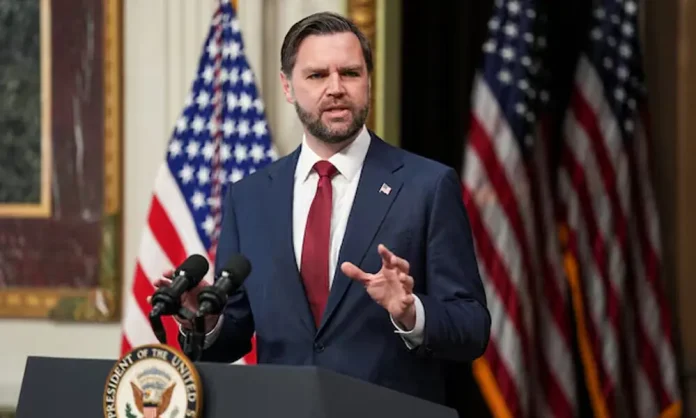
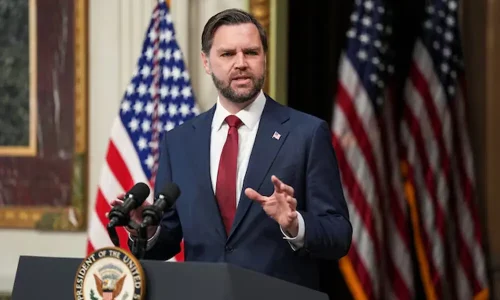
Landmark peace talks between the United States and Iran have ended without an agreement in Islamabad, with US Vice President JD Vance declaring that Tehran refused to accept Washington’s terms after more than 21 hours of negotiations, marking a significant setback in efforts to end a six-week war between the two countries.
“The bad news is that we have not reached an agreement, and I think that’s bad news for Iran much more than it’s bad news for the United States of America,” Vance told reporters on Sunday, shortly before boarding Air Force Two to leave Pakistan.
The talks were the first face-to-face engagement between the US and Iran since 2015 and the highest-level discussions since the 1979 Islamic Revolution, beginning in Islamabad on Saturday as the two sides sought a deal to end the war that has shaken the Middle East for six weeks.
The central sticking point was Iran’s refusal to commit to permanently abandoning its pursuit of nuclear weapons. “The simple fact is we need to see an affirmative commitment that they will not seek a nuclear weapon and they will not seek the tools that would enable them to quickly achieve a nuclear weapon,” Vance said. “That is the core goal of the President of the United States.”
According to a White House official, the non-negotiable parameters President Donald Trump set for Iran included dismantling its major nuclear enrichment facilities, retrieving more than 400 kilograms of highly enriched uranium believed to be buried underground, accepting a broader peace and de-escalation framework that includes regional allies, and ending funding for proxy groups Hamas, Hezbollah and the Houthis.
On social media platform Truth Social, Trump wrote that “the meeting went well, most points were agreed to, but the only point that really mattered, NUCLEAR, was not.” Shortly after the talks ended, Trump announced that US Navy vessels would begin blockading the Strait of Hormuz.
Iran’s Parliament Speaker Mohammad Bagher Ghalibaf, who led the Tehran delegation, said his side had raised forward-looking proposals but that the US had failed to gain the trust of the Iranian team. Iran’s Foreign Ministry spokesperson Esmaeil Baghaei said the talks had been held “after 40 days of imposed war, in an atmosphere of mistrust and suspicion,” adding that no one had expected a comprehensive agreement to emerge from a single session.
Iran’s Foreign Ministry confirmed that discussions covered the Strait of Hormuz, the nuclear issue, war reparations, the lifting of sanctions, and a complete end to the war against Iran and in the region. Control of the Strait of Hormuz, through which roughly 20 percent of the world’s oil and gas supplies pass, has been a central point of contention, with Iran maintaining a chokehold on the waterway since the conflict began.
The Pakistani side was surprised that the talks broke down so quickly, having believed the two sides were close to a general formula for a deal and that extended discussions over several days could bring them together. Pakistani Foreign Minister Ishaq Dar called on both sides to uphold the existing ceasefire and continue working toward lasting peace, expressing gratitude for the opportunity to serve as mediator.
Vance departed Islamabad saying the US had presented its “final and best offer” and left the door open for Iran to reconsider, though analysts noted the gaps between the two sides on nuclear commitments, sanctions, and the strait remained deep. Diplomatic contacts through Pakistan and other regional partners are expected to continue.